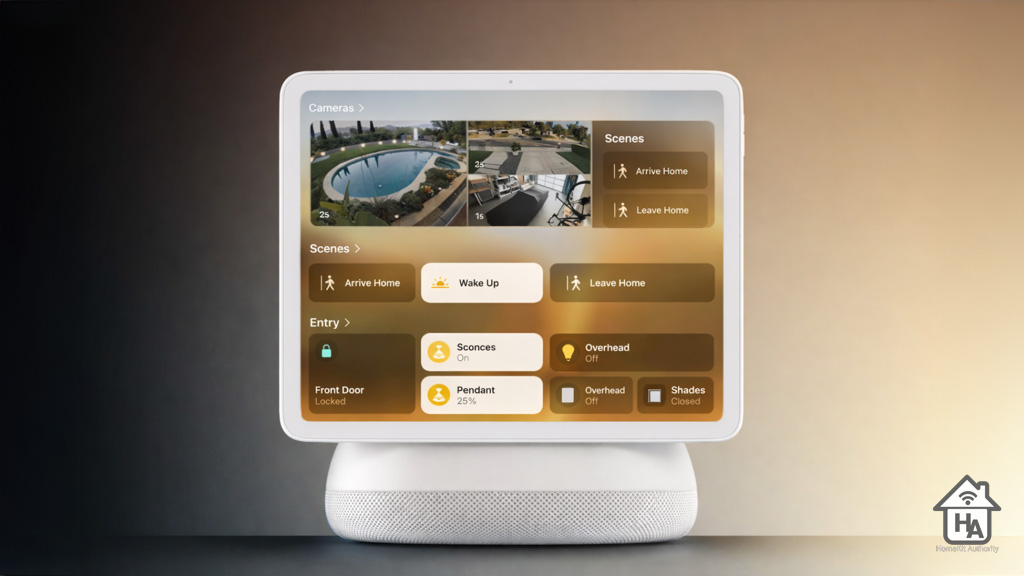
Apple is reportedly preparing its most ambitious smart-home push to date, centred around a new Home Hub that will rely heavily on the next, significantly more capable version of Siri expected to arrive alongside iOS 26.4 While rumours around this device have circulated for nearly two years, recent discoveries within iOS 26 code have added weight to those claims, and, more importantly, revealed that the Home Hub may only be one part of a much broader smart-home strategy for 2026 and beyond.
Rather than a single product launch, Apple appears to be laying the groundwork for an interconnected ecosystem that includes a new Home Hub, AirTag 2, a next-generation HomePod mini, and at least one additional smart-home device that could be a smart camera or video doorbell referenced only as J229.
The Home Hub: Design and Physical Form
Apple’s Home Hub is expected to resemble a small iPad, featuring an all-display front with thick bezels. Unlike Apple’s tablets, however, it is said to be square rather than rectangular, measuring roughly six inches. In real-world terms, it would be similar in size to two iPhones placed side by side.

The device is expected to be lightweight and portable, suggesting it won’t be permanently fixed to one location. Instead, Apple appears to be positioning it as a communal screen that can move between rooms as needed.
Touch interaction will be a core part of the experience, allowing users to control smart-home accessories, interact with apps, and manage media directly from the display.
Apple is also believed to be developing two versions of the Home Hub. One would feature a 7-inch display designed for wall mounting, while the other would pair the same display with a speaker base similar in size to a HomePod mini.
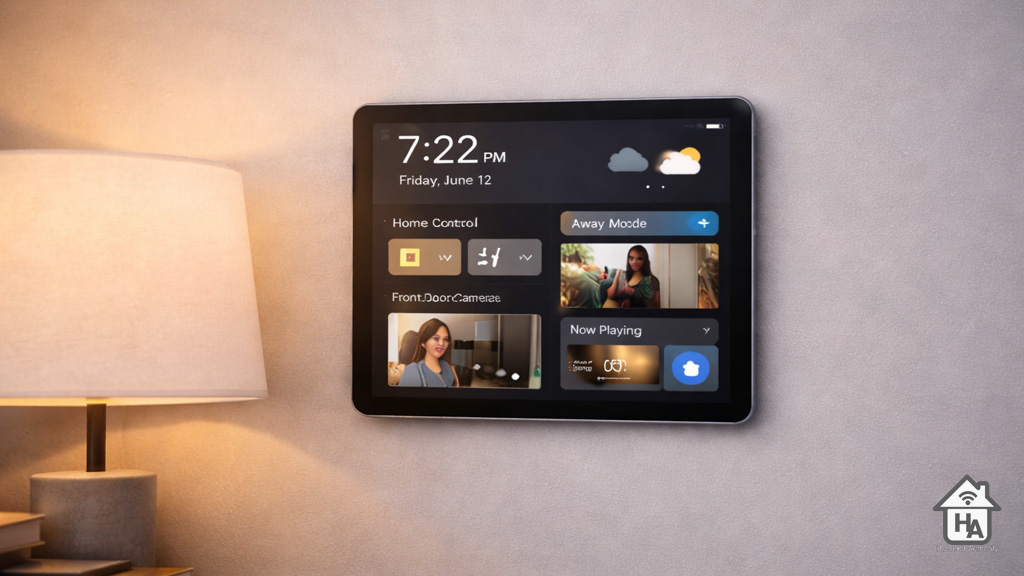
Bloomberg’s Mark Gurman has suggested the speaker-based model could adopt a dome like base reminiscent of the iconic iMac G4. The display would sit at an angle above the base, allowing the interface to adapt dynamically depending on how close someone is standing.
Presence, Sensors, and Context Awareness
Presence detection appears to be central to the Home Hub’s identity. When no one is nearby, the screen might show passive information such as the time, weather, or temperature. As someone approaches, it could transition to interactive controls like lighting scenes, music playback, or thermostat adjustments.
Person detection is expected to go further, allowing the Home Hub to trigger smart-home automations when someone enters a room. It may also be capable of distinguishing between different people, enabling personalised experiences without manual input. I have always believed Presence detection using sensors and Ultra wide band is the route Apple should go with HomeKit to really make your home smarter.
For example, if a user is wearing an Apple Watch, a HomeKit hub such as a HomePod mini could use that presence data to understand where they are within the home. As you enter a room with your Apple Watch on your wrist, the hub could automatically trigger HomeKit-compatible devices specific to that space.
Taking this a step further, those actions could be shaped by time-based automation rules. In the evening, walking into the bedroom might automatically dim the lights and shift them to warmer tones. In contrast, entering the living room in the morning could raise the blinds and start playback on the HomePod, whether that’s your morning playlist or a favourite radio station.
There are also indications of gesture recognition for longer-range control, reducing the need to touch the screen. Apple has reportedly explored additional plug-in sensors to enhance this experience, though it’s unclear whether those will ship as consumer products.
Audio and Apple’s Smart-Home Positioning
The Home Hub is expected to include built-in speakers, with the potential for an optional dock that enhances audio output. Analyst Ming-Chi Kuo believes Apple may ultimately position the device closer to the HomePod lineup than the iPad family — effectively making it a HomePod with a display rather than a tablet replacement.
That distinction is important. It suggests Apple sees the Home Hub as a shared, voice-first device designed to complement HomePods, not compete with iPads.
“Charismatic”: A New OS Built for the Home
The Home Hub is expected to run a new operating system internally referred to as Charismatic. The new OS which could finally be called HomeOS, designed specifically for shared household use, the interface is said to prioritise widgets, clock faces, and glanceable information over traditional app grids.
The home screen would be fully customisable, displaying weather, key Home controls, photo slideshows, calendars, reminders, and media playback. Rather than navigating apps, users would interact with information that adapts based on time, location, and presence.
Siri is expected to undergo a significant evolution as part of this experience. Apple has reportedly experimented with giving Siri a more visual, personified appearance — potentially resembling an animated version of the Mac Finder icon. This would mark a clear shift away from Siri’s current abstract orb-style interface.
Apple is not expected to introduce a dedicated App Store for the Home Hub. Instead, it will ship with a curated set of pre-installed apps, including Safari, Apple News, Apple Music, Notes, Calendar, Photos, and the Home app. Third-party app support remains unclear and may be introduced gradually.
Face ID, Profiles, and Multi-User Support
A built-in camera is expected to enable Face ID, allowing the Home Hub to recognise who is in the room and automatically switch profiles. Calendars, reminders, widgets, and media recommendations could change depending on whether it’s you, your partner, or another family member interacting with the device.
This automatic profile switching reinforces Apple’s vision of the Home Hub as a truly shared household device — one that adapts seamlessly to individuals without manual setup.
iOS 26 Code Leaks: Reinforcement, Not Revelation
Recent iOS 26 code leaks appear to confirm many of these expectations. Macworld reports references to the Home Hub that include a 1080p camera, Face ID support, profile switching, and Apple Intelligence integration. Apple engineers are reportedly using internal tools to test recognition accuracy.
While none of these features are particularly surprising on their own, their presence in system-level code strongly suggests the Home Hub is nearing readiness.
AirTag 2: Quiet Evolution, Deeper Integration
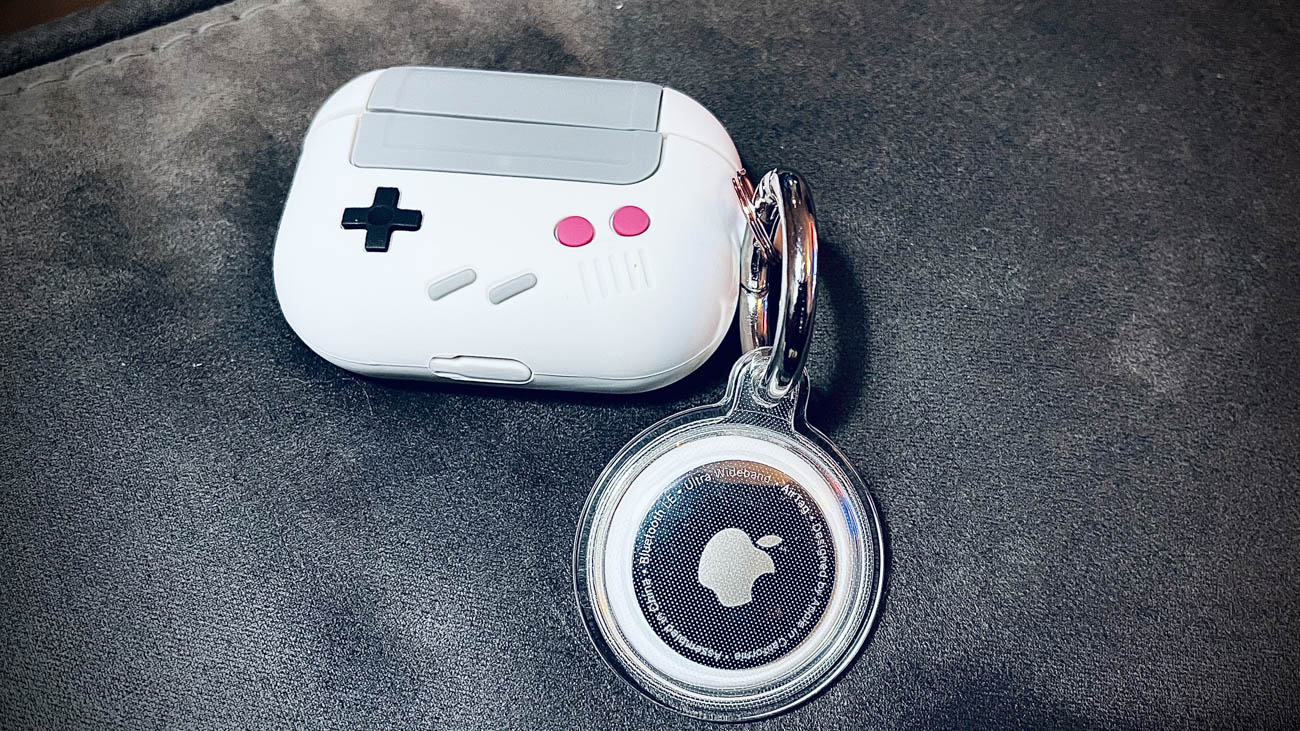
iOS 26 also contains multiple references pointing to AirTag 2, suggesting Apple originally planned to release the updated tracker in 2025 before pushing it back.
The references indicate improvements to Bluetooth performance, potentially extending range and reliability, alongside better low-battery state handling with clearer alerts or smarter power management.
There are also signs of enhanced crowdsourced location tracking, implying refinements to how AirTags leverage nearby Apple devices for faster and more accurate updates.
More cryptic internal identifiers — such as AirTag2025_Phone_Finding, AirTag2025_Watch_Finding, Distribution, Battery, and Switchover — point to deeper system-level integration. These could reflect improved hand-offs between iPhone and Apple Watch, smarter tracking transitions, or optimisations that balance accuracy with battery life.
While AirTag 2 may not attract the same attention as the Home Hub, the changes suggest Apple is focused on reliability, intelligence, and ecosystem cohesion rather than surface-level upgrades.
HomePod (Second Generation): Long Overdue
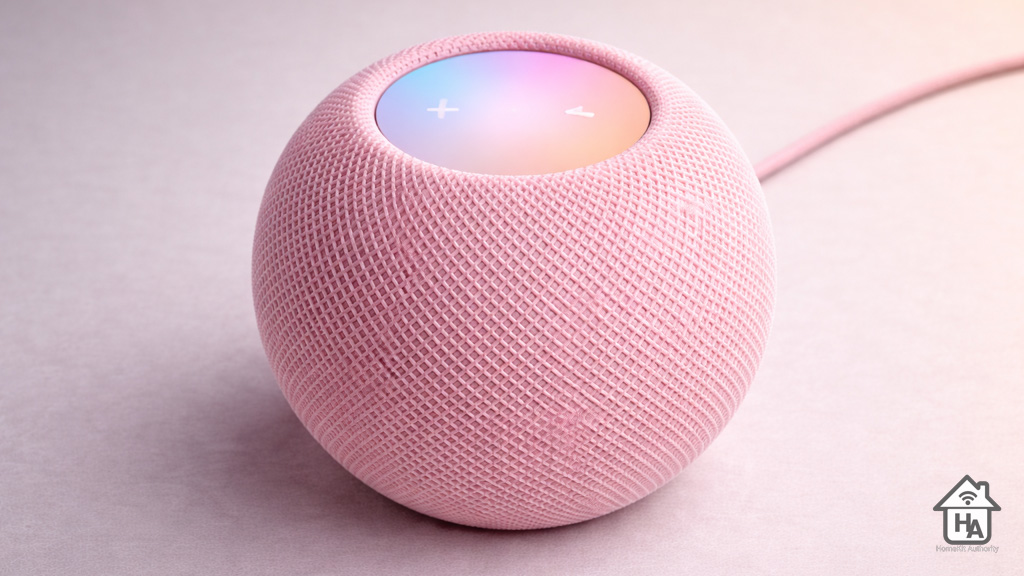
iOS 26 also appears to reference a new HomePod model, likely a second-generation successor to the HomePod mini. The device reportedly carries the internal codename B525, an evolution from the current mini’s B520, indicating a true generational update.
It has been over five years since the HomePod mini launched, and its hardware is increasingly strained by modern smart-home and AI demands. Rather than a dramatic redesign, expectations are that the next HomePod will focus on internal upgrades.
A newer chipset would enable Apple Intelligence, unlocking a far more capable Siri with improved context awareness, responsiveness, and reliability. Additional rumours suggest improved microphones, enhanced audio quality, and expanded codec support.
According to MacRumors, the device may also feature an Apple-designed Wi-Fi and Bluetooth combo chip with Wi-Fi 6E support, improving latency and stability in congested wireless environments. New colour options are also reportedly being considered.
Another Smart-Home Device: “J229”
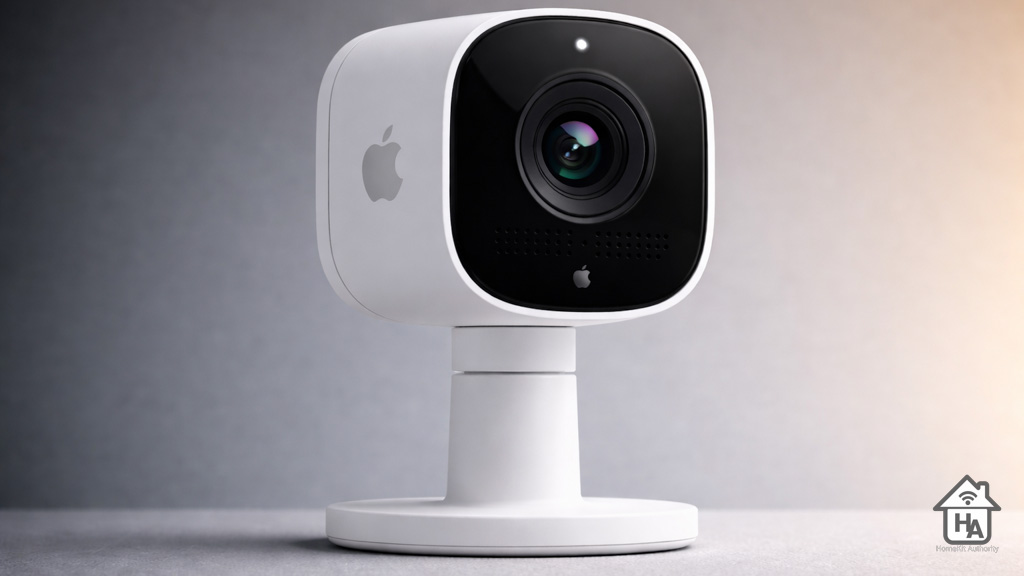
Alongside these products, iOS 26 references another previously unseen smart-home device identified internally as “J229.”Its exact purpose remains unclear, but its presence suggests Apple is experimenting with additional modular or companion hardware.
One possibility is that “J229” represents a standalone base or dock that can be added to the wall-mounted Home Hub, allowing Apple to sell the display and speaker components separately. This would give users flexibility to expand their setup over time without replacing the entire device.
Another strong possibility is that “J229” refers to a separate smart-home accessory, potentially the long-rumoured Apple home security camera. Such a device could integrate tightly with HomeKit, Face ID-style recognition, and Apple Intelligence, offering presence detection, alarm sound recognition, or visual context for automations — all handled within Apple’s privacy-focused ecosystem.
Whether “J229” becomes an extension of the Home Hub or a standalone product, its inclusion alongside other smart-home references reinforces the idea that Apple is building a layered, modular platform rather than a single flagship device.
A Unified Smart-Home Vision
Taken together, the Home Hub, AirTag 2, next-generation HomePod mini, and the mysterious “J229” device point to Apple’s most cohesive smart-home strategy yet.
The Home Hub would serve as the visual and contextual centre of the home. HomePods would provide the voice and audio backbone along with Apple TV. AirTag 2 would quietly extend spatial awareness. Additional accessories could layer in sensing, security, and automation. All of it would be tied together by Apple Intelligence, presence detection, and deeper system-level integration.
Smart displays from Google and Amazon already exist, but Apple’s absence in this space has been notable. If Apple can finally deliver a genuinely capable Siri and bring these devices together into a seamless experience, the Home Hub could become the smart-home centre Apple users have been waiting for.
For the first time in years, Apple’s smart-home roadmap doesn’t just feel dormant and if true could put some fire back into HomeKit.